

How Botox Can Help With Excessive Sweating
If you're dealing with heavy sweating even during ordinary daily activities, you know how hard it can be to predict or control. For people dealing with recurrent sweating, Botox may offer a nonsurgical way to reduce localized perspiration.
This guide explains how Botox can help with excessive sweating in targeted areas. Awaken Aesthetics combines the clinical background of founder Chetna Patel, MSN-RN, ACNP, a board-certified critical care nurse practitioner with more than 20 years of medical experience, with the skin-care expertise of Licensed Advanced Esthetician Katie. Below, the team explains what you need to know about Botox for sweating.
Hyperhidrosis and Clinical Botox Relief
Hyperhidrosis is sweating that goes beyond what your body needs for temperature control. It may cause soaked clothing, physical discomfort, and frequent changes during the day. Visible perspiration can also make work or social situations more stressful.
Botulinum toxin offers a nonsurgical way to reduce localized sweat production. Botox is FDA-approved for severe primary underarm hyperhidrosis when topical treatments do not provide enough relief. In contrast, treatment in other areas may be performed off-label after a medical evaluation.
Understanding How Botox Blocks Excessive Sweat Production
If you are wondering how Botox can help with excessive sweating, it works by blocking the nerve signals that activate your sweat glands. This temporary nerve blockage reduces excessive sweating in the treated area without stopping normal sweating elsewhere.
Because sweating can also be linked to health conditions or medications, reviewing the reasons for excessive sweating can help you understand why an evaluation comes first.
Common treatment areas include:
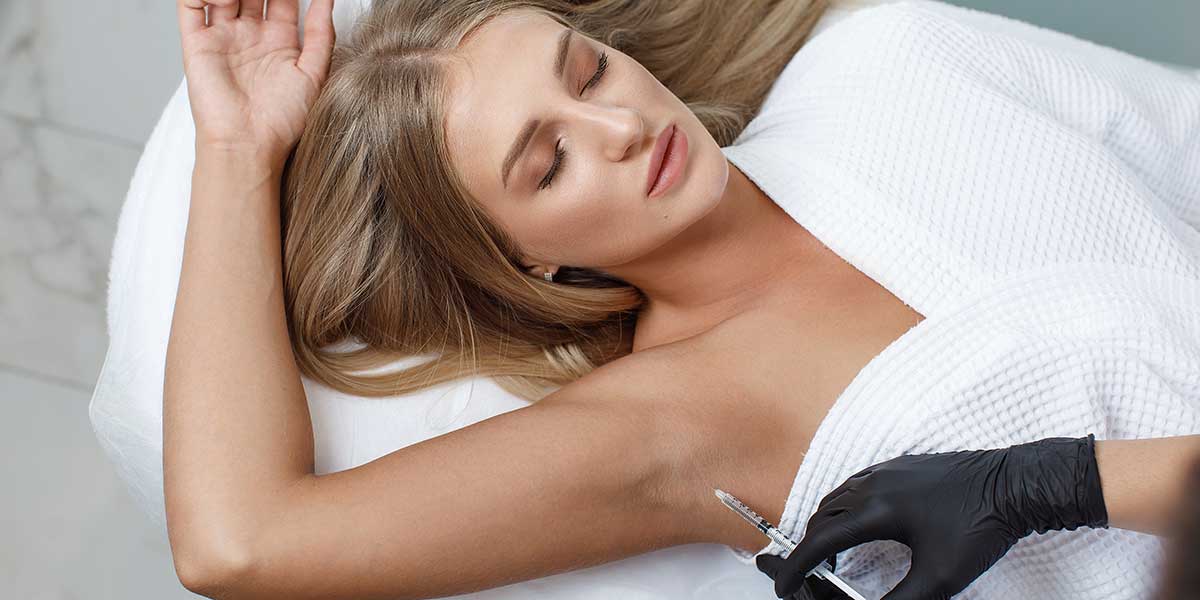
- Underarms: FDA-approved injections may reduce severe primary axillary sweating when topical treatment has not worked well enough.
- Palms: Off-label treatment may be considered when persistent hand sweating disrupts daily tasks or social contact.
- Soles: Off-label injections may be used for severe foot sweating after the benefits and limitations are reviewed.
These localized treatments allow other areas to continue sweating normally, helping preserve your body’s broader cooling response.
What To Expect During Medical Treatment
Your visit begins with a personalized evaluation. Chetna Patel can review your medical history and assess your sweating pattern. She can then customize the dosage plan based on your symptoms.
The treatment process generally includes:
- Preparation: The skin is cleaned, and the active sweating pattern is identified before treatment begins.
- Injections: Small amounts of medication are placed with fine needles using comfort-focused techniques.
- Timing: Treatment may take about 20 to 30 minutes, depending on the size of the area.
Sweat reduction often begins within a few days, with fuller effects developing within about two weeks. Results commonly last four to six months or longer, although duration differs from person to person.
As nerve signaling gradually returns, perspiration may increase again. Your response can help determine when repeat treatment may be appropriate.
The Key Benefits of Injectable Care for Sweating
Potential benefits include:
- Greater daily comfort: Less moisture can reduce the disruption caused by persistent sweating.
- Minimal downtime: You can generally resume routine activities soon after treatment.
- Targeted control: Treatment focuses on selected areas rather than suppressing perspiration throughout your body.
These benefits can make treatment easier to fit into everyday life. Your provider may also discuss skin care that supports your treatment plan.
How To Prepare for Your Botox Appointment
A little preparation can help your appointment go more smoothly. Before treatment, share any medications or previous reactions to injectable products with your provider. You should also mention recent procedures or changes in your health that could affect treatment decisions.
Follow any specific pre-appointment instructions your provider gives you rather than changing medications on your own. Wearing comfortable clothing that provides easy access to the treatment area can also make the visit more convenient.
Who May Be a Good Candidate for Treatment?
You may be a candidate for Botox if persistent localized sweating has not improved enough with prescription antiperspirants and you prefer a nonsurgical option.
If you want to know how Botox can help with excessive sweating, our providers can explain what results to expect and how long they may last. They can also review possible side effects and whether treatment for your chosen area is FDA-approved or off-label. Financing options may also help make treatment costs easier to plan.
Reclaim Comfort and Confidence With Awaken Aesthetics
Knowing how Botox can help with excessive sweating can help you decide whether targeted injectable care fits your symptoms. We can answer your questions about what treatment involves and what you may experience afterward.
Because results are temporary, we can also discuss appropriate Botox injection frequency based on your responses. To discuss treatments for persistent sweating, call Awaken Aesthetics at (330) 469-5059.